One of the oldest and largest Buddhist celebrations in Sri Lanka is the Esala Perahera in Kandy, which features dancers, jugglers, musicians, fire-breathers, and elephants that have been lavishly decorated. This takes place in Esala (July or August), the month that is thought to honour the Buddha’s first teaching after attaining enlightenment. The ten-day Kandy Esala Perahera features a variety of celebrations that go on the entire time. The Sinhalese word “Perahera” refers to a procession of performers, including musicians, dancers, singers, acrobats, and other entertainers, together with a sizable contingent of caparisoned elephants and tuskers parading the streets in honour of a holy occasion.
Order of the Procession
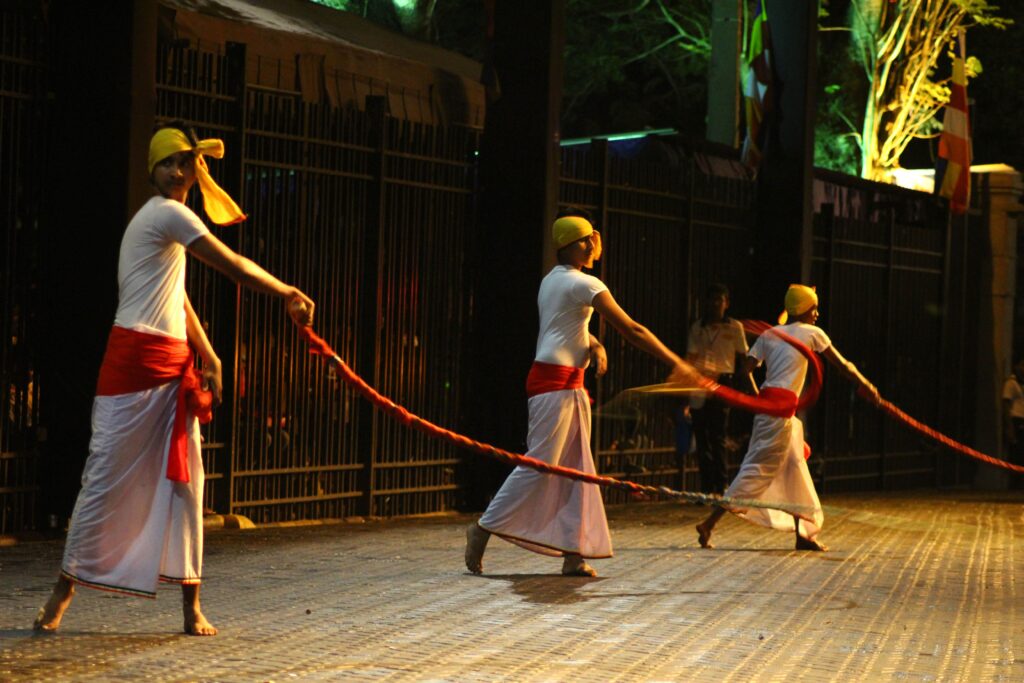
01. Whip Crackers
The Whip Crackers lead the procession at the front. The procession’s approach is signaled by the cracking of whips from the beginning to the finish of the route designated by Perahera.
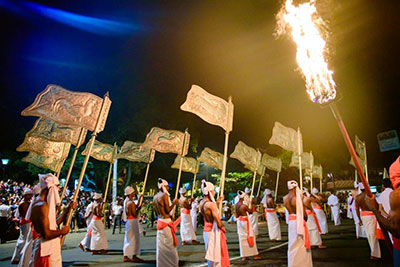
02. Flag Bearers
The flag bearers follow the whip crackers in single file on both sides of the road, bearing the national flag, as well as the flags from the various provinces and temples. Following him with the register of the Holy Temple of the Tooth in Kandy is the official named Peramunerala riding the first elephant.
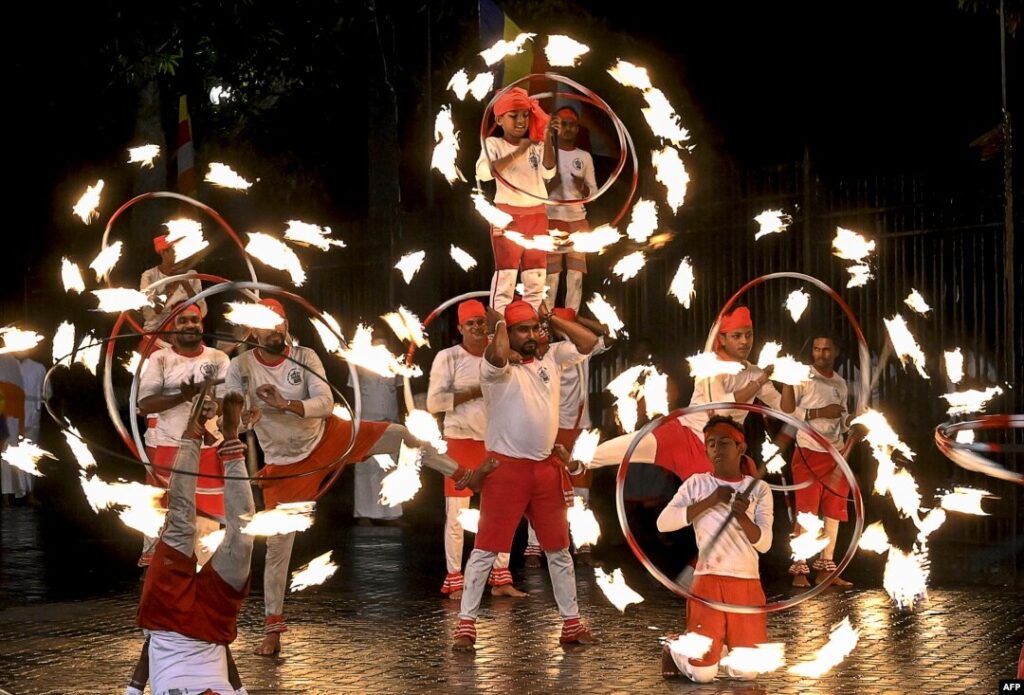
03. Fire Ball Dancers
After that, you may see fireball dancers, who play with burning balls of material, in action. This group puts on incredible dancing routines with lots of acrobatic skills.These fireball dancers, or “Pandampaliya,” represent the radiance of illumination. This dance piece is quite engaging and has amazing rhythm and motions.
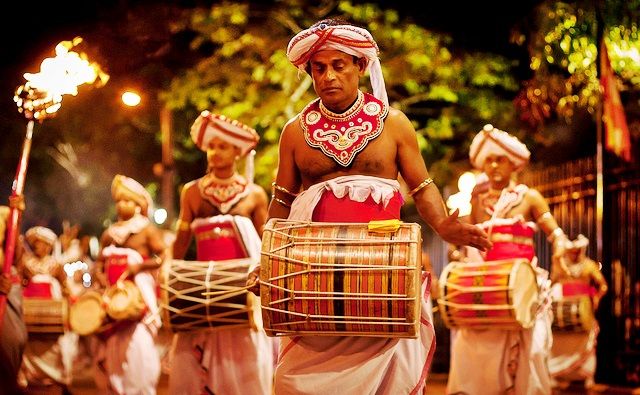
04. Drummers
The drummers playing traditional drums and flutes come next in the parade. It is a religious ceremony carried out to honour the relic of the sacred tooth. Hereditary drummers from multiple generations are participating in this parade. To venerate the hallowed tooth relic, they play the tunes with utmost reverence and respect.
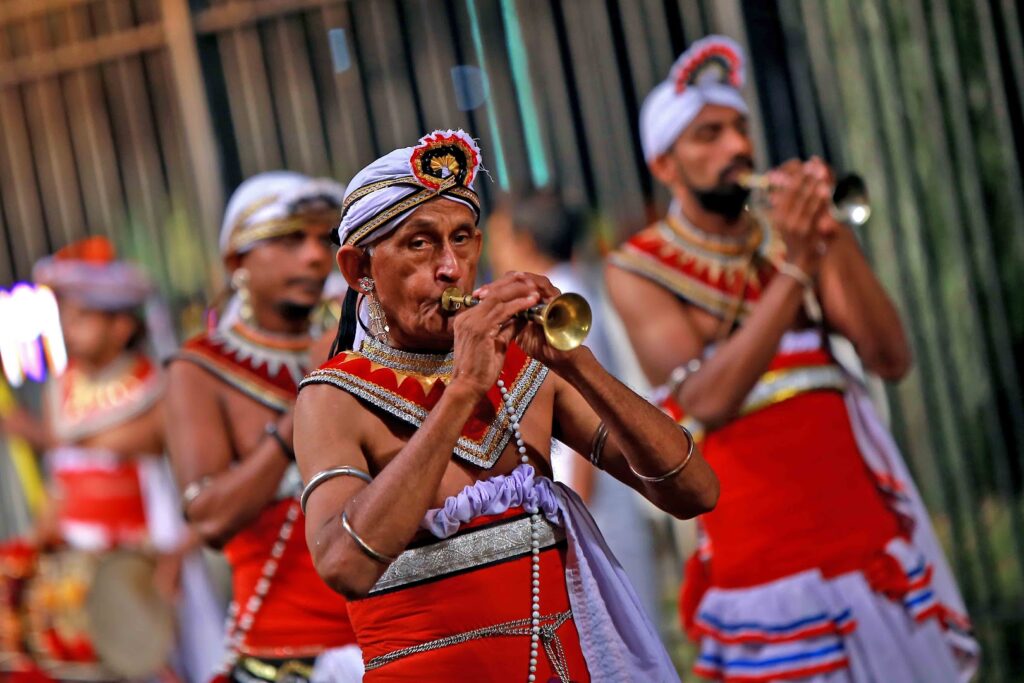
05. Trumpet Players
Trumpet players play the traditional tune of Gajaga Wannama throughout the procession. This tune is very popular among Sri Lankans, as the tune of Dalada Perahera.
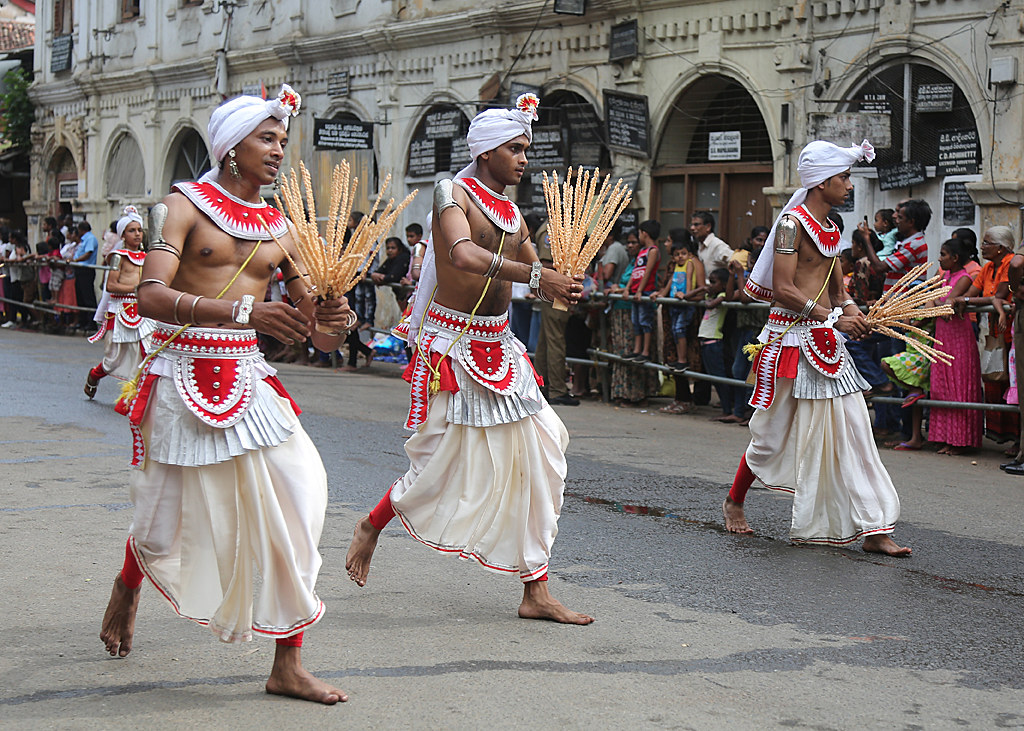
06. Traditional Dancers
Then you can see performers of traditional dances with coconut flowers. The coconut blooms are held in their hands as they dance. According to traditional Sri Lankan beliefs, the coconut flower represents prosperity. These coconut blossom dancers represent Esala Perahera’s intention to wish the nation success.
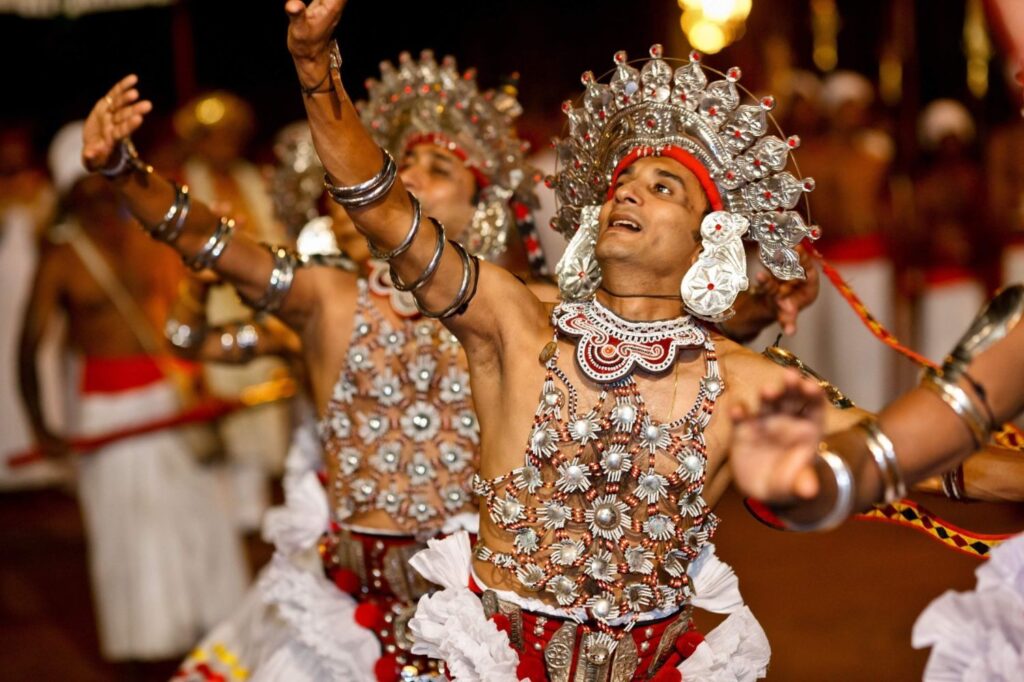
07. Kandyan Dancers
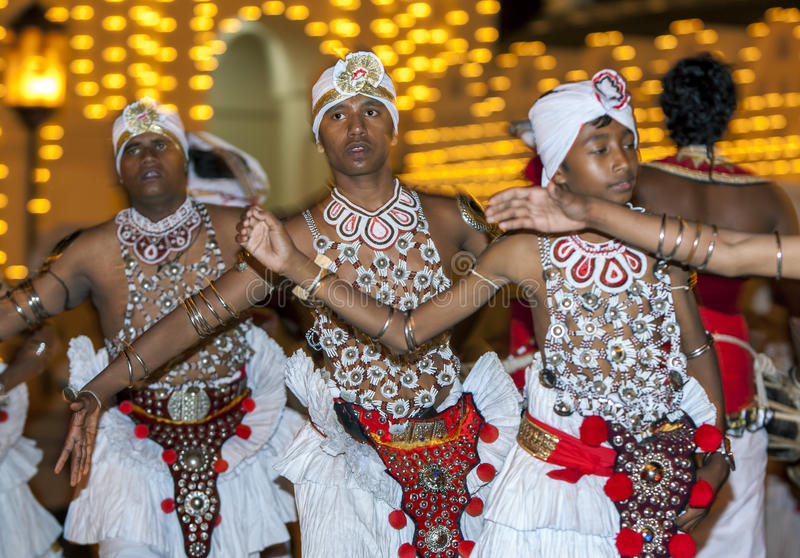
Native to Kandy, the Kandyan dance represents the Kandyan way of life. In Sri Lanka, only male dancers execute it. Their leaps and movements are amazing and magnificent, and they have the power to mesmerize the audience. The acrobatic moves of the dancing teams of traditional Kandyan dancers work their charm. One of the pageant’s most impressive performances features strong leaps and spins.
A large team of traditional Kandyan dancers dance to the music of drums. Kandyan dancers wear colourful elaborate costumes adorned with rattling anklets, jingling bangles, and funky headgear. They are highly talented and experienced in participating in the Perahera festival.
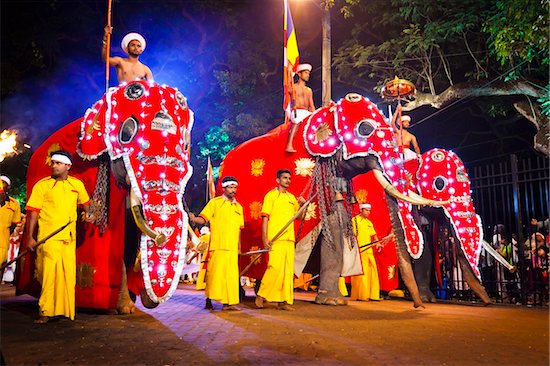
08. Elephant Parades
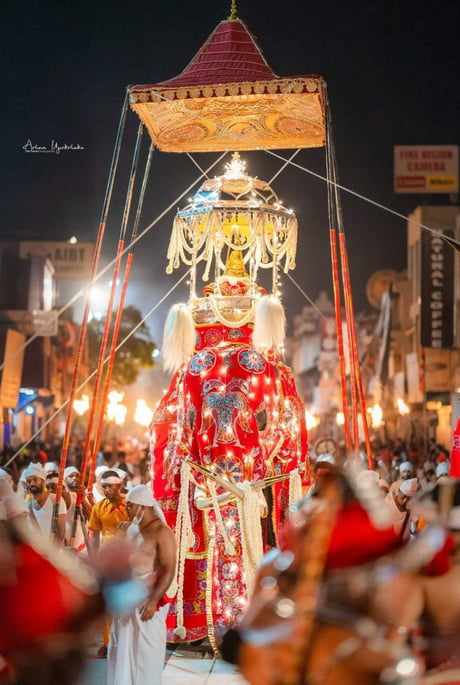
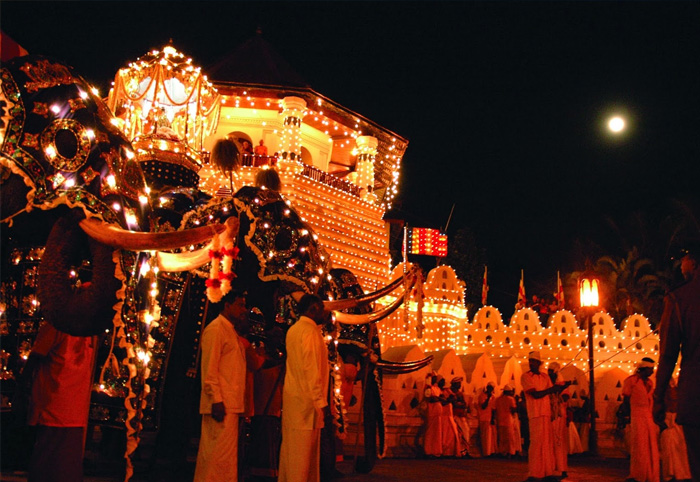
The beautifully decorated elephants are one of the most captivating sights in Perahera. The elephants are adorned with lavish garments and illuminated with lights. The officials related to the Temple of Tooth are riding on top of the elephants, call as Peramune Rala and Nilames.
09. Ceremonial Tusker
The entrance of the majestic ceremonial tusker is unquestionably the most eagerly anticipated aspect of the parade. He is holding the golden reliquary containing the Lord Buddha’s precious tooth. He is surrounded by two more exquisitely decorated tuskers and is dressed in an attractive gown that is delicately lighted.
The arrival of the tusker is the center of attraction: the Maligawa Tusker walks majestically in supreme grace and great pride carrying the resplendent golden casket. The golden casket contains the sacred Tooth Relic of Buddha called the ‘Karaduwa’ and it is sheltered by a canopy.
When the majestic tusker is walking, the walking path covers with a white cloth called Pawada for him to walk on. This is the most awe-inspiring sight for the Buddhists, as seeing the sacred tooth relic of the Lord Buddha in front of the eyes in the golden casket atop the majestic tusker.
10. Traditional Dancers
Soon after the Maligawa tusker, two long lines of traditional Kandyan dancers can be seen. They create a vibrant dancing scene while laying the path for the Diyawadana Nilame, the custodian of the Temple of Tooth.